

Five Factors to Consider when Choosing a Fishfinder
The information provided is for general informational purposes only. This information is based on the author’s personal experience and does not constitute financial or legal advice. You should consult with a professional and/or conduct your own independent research to verify any information in this post prior to making a financial decision or otherwise.
Choosing a fishfinder you’ll be happy with is no easy task. Take these five factors into consideration, however, and you’ll be able to make an informed pick.
Screen Size
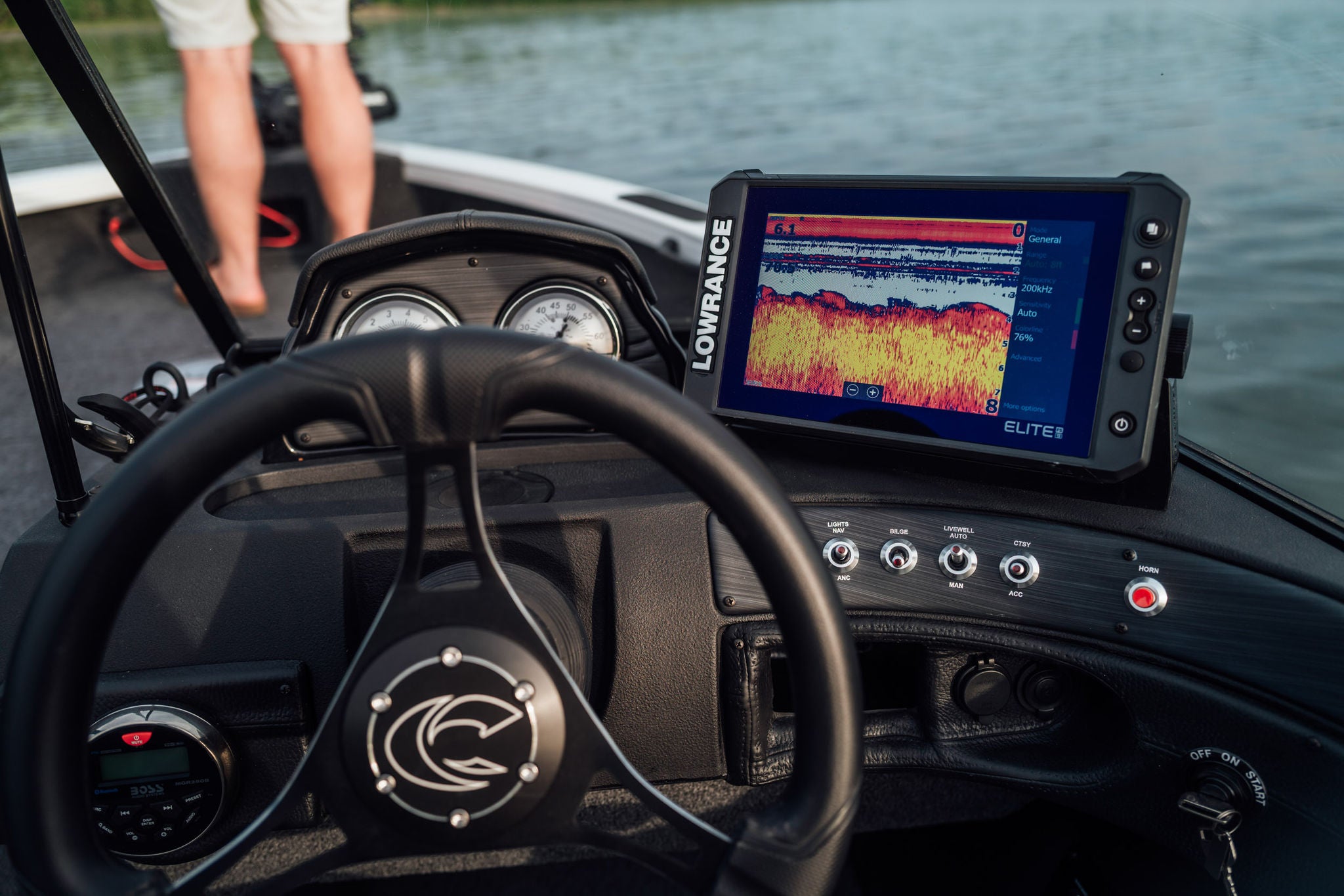
Get the largest screen size possible for the fishing boat you own. The bottom line is that more LCD territory equals more detail on the screen. Plus, most of today’s fishfinders have multiple functions and the ability to split the screen into different windows. While this is convenient, it shrinks the view, so a larger screen offers easier visibility.
Keep in mind that your boat is often a limiting factor when it comes to fishfinder size. Crestliner boats, for example, have helms designed for mounting large fishfinders. Other makes and models have windshield designs or dash mounting spaces that can accommodate only small fishfinder units.
User Interface
Play around with units of approximate equivalent cost from different brands. Fishfinders offer a variety of menu systems and user interfaces, so explore to find out which ones are more intuitive to you.
GPS/Chartplotter
Most of today’s midrange and high-end fishfinders also have GPS/chartplotter functionality. If you always fish in small lakes or ponds or never go far from the boat ramp, you may not need GPS at all. But if you're an explorer, it’s often worth stepping up to a unit that offers navigational capabilities even if it costs a bit more.
Side-Scanning
Consider whether you need side-scanning abilities. Side-scanners have come down in price in the last few years, but they still cost more than a simple down-looking unit. There’s also a steep learning curve involved when it comes to interpreting what you see on the screen.
Side-scan may be more or less useful depending on what type of fishing you do. For example, if you mostly jig vertically or fish baits on the bottom in deep water, you won’t find that it’s much of a help. But if you cast light tackle in shallow water, it can help you identify hotspots you wouldn’t otherwise find.
Networking
Consider whether you want networking abilities. Some fishfinders can “talk” to the boat’s accessories, like trolling motors, Power Poles, and stereos. For many anglers with relatively simple aluminum fishing boats, this sort of functionality is overkill. But if you have a high-tech tournament-level boat like an MX series bass boat, more advanced systems like this may be worth the expense.
This website does not provide financial or legal advice. The information available on this website is provided for general informational and educational purposes only and is not a substitute for professional advice. You should consult with the appropriate professionals prior to making any financial decisions. YOUR USE OR RELIANCE ON ANY OF THE INFORMATION PROVIDED HEREIN IS SOLELY AT YOUR OWN RISK. UNDER NO CIRCUMSTANCE SHALL WE HAVE ANY LIABILITY TO YOU FOR ANY LOSS OR DAMAGE OF ANY KIND INCURRED AS A RESULT OF THE USE OR RELIANCE ON ANY INFORMATION PROVIDED.