

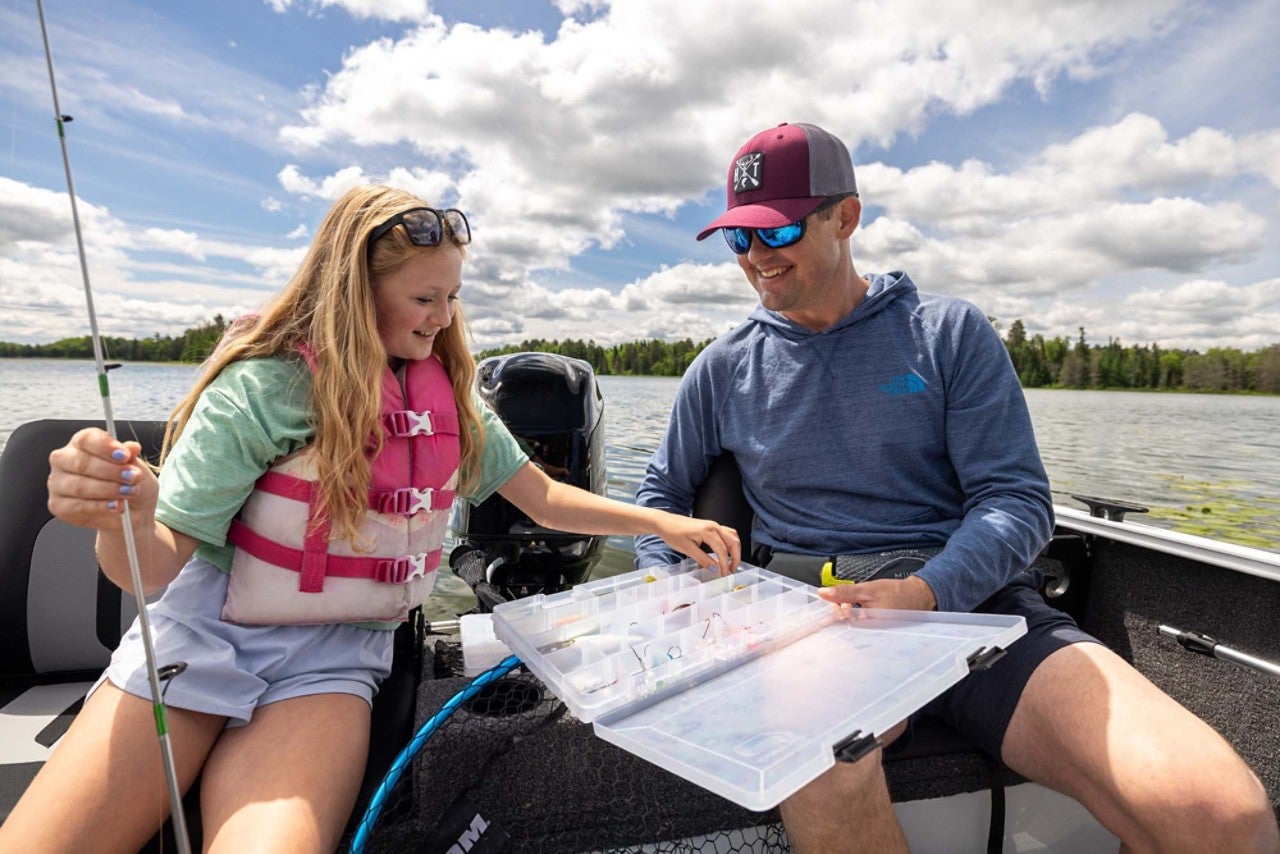
How to Choose the Ideal Lure Color
The information provided is for general informational purposes only. This information is based on the author’s personal experience and does not constitute financial or legal advice. You should consult with a professional and/or conduct your own independent research to verify any information in this post prior to making a financial decision or otherwise.
The tackle shop shelves are lined with countless color patterns, so how’s an angler supposed to choose which one to use? Even after narrowing down your decision to one specific type of lure, there are so many different colors and shades that choosing which to tie onto the end of your line can be overwhelming. As a result, most anglers stick with a favorite color or two, make a guess, or simply grab what looks good to their human eyes.
Savvy anglers, however, will observe a few important rules when they choose what color lure to opt for at any given time.
Match lure color to water color
If you’ve looked at a fishing lure color selection chart, you’ve probably noticed that they tend to follow a similar pattern, matching light with light, dark with dark, and so on. So, when you arrive at a fishing spot, you should gaze around and see what the water looks like before making your initial choice. Here are some basic tips:
- Green water: Chartreuse or lime lures
- Clear water: White or silver lures
- Tannic-stained water: Brown or pumpkinseed lures
- Dark water: Black lures
Consider lighting
Opt for bright, glossy lures in direct sunlight and matte colors in low light conditions. Flashy silver and gold metallic finishes reflect lots of light when it’s bright out, but in dull lighting, their effectiveness wanes. When there’s heavy cloud cover or rain, reach instead for neutral colors that stand out against the available light rather than trying to reflect it.
Match the hatch
In lakes where shad are the prevalent prey species, white, silver, or gray lures are likely to produce. If bluegill are the meal those predators are after, try pumpkinseed patterns with green and orange.
Think beyond the “rules”
Predicting a fish’s preference is even less reliable than predicting the weather, and there will be days when some unusual lure color choice will work better than anything else for no apparent reason. Remember that these “rules” are just starting points for choosing what color lure to use. If you’re not getting strikes, start thinking outside the box. Don’t keep throwing the same old colors. Instead, try switching things up.
Okay: ready to hit the tackle shop and stock up? Hopefully you have a Crestliner fishing boat, since Crestliner boats have plenty of integrated stowage for all your fishing gear. You’re going to need it, especially for all those tackleboxes full of different color lures.
This website does not provide financial or legal advice. The information available on this website is provided for general informational and educational purposes only and is not a substitute for professional advice. You should consult with the appropriate professionals prior to making any financial decisions. YOUR USE OR RELIANCE ON ANY OF THE INFORMATION PROVIDED HEREIN IS SOLELY AT YOUR OWN RISK. UNDER NO CIRCUMSTANCE SHALL WE HAVE ANY LIABILITY TO YOU FOR ANY LOSS OR DAMAGE OF ANY KIND INCURRED AS A RESULT OF THE USE OR RELIANCE ON ANY INFORMATION PROVIDED.