

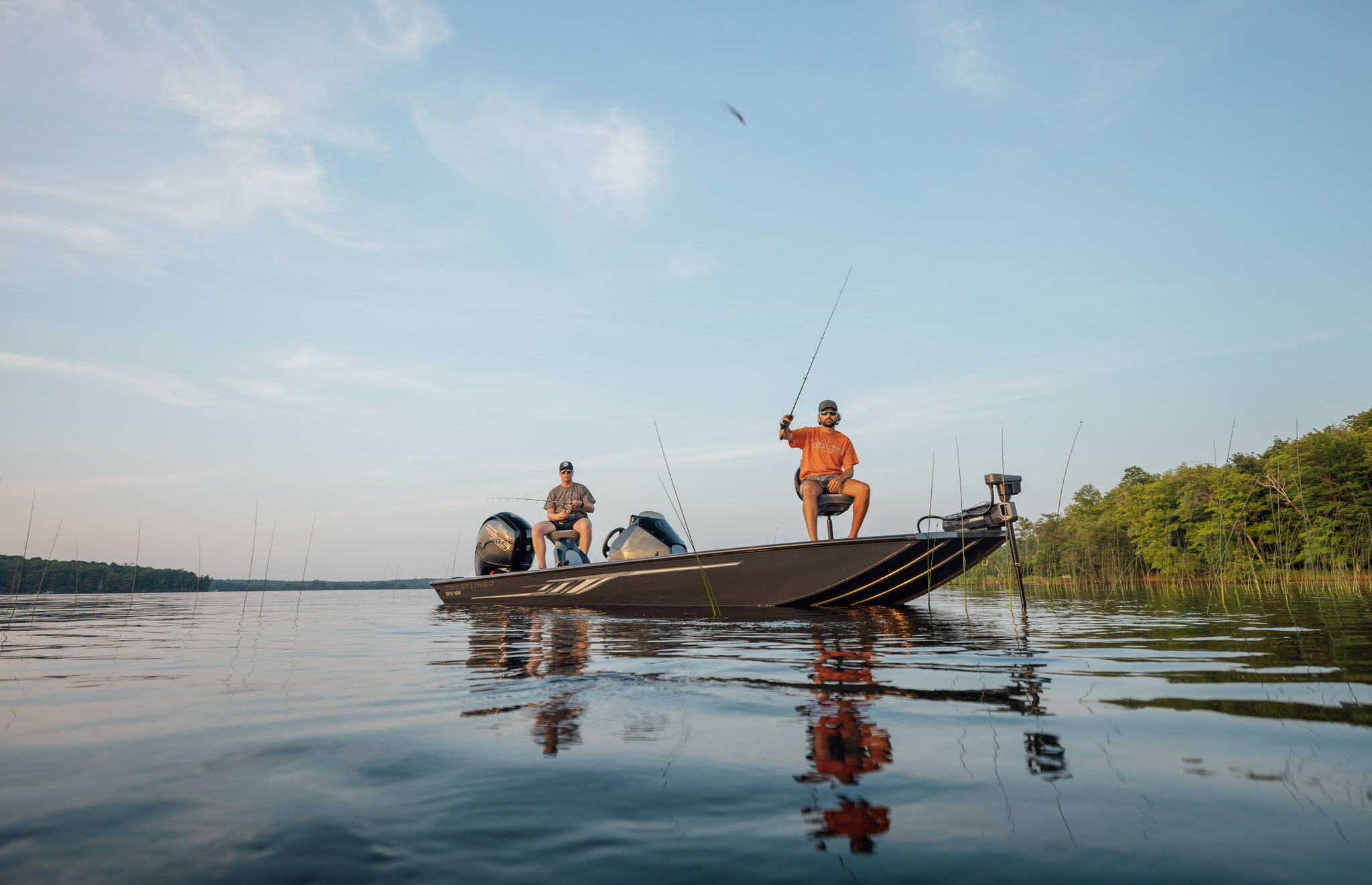
Fishing Boats: 6 Things to Consider When Buying
The information provided is for general informational purposes only. This information is based on the author’s personal experience and does not constitute financial or legal advice. You should consult with a professional and/or conduct your own independent research to verify any information in this post prior to making a financial decision or otherwise.
You’ve dreamed of buying a fishing boat forever, and now the wait is over. And don’t worry—buying your first fishing boat is easy, as long as you answer a few important questions before you begin. Let’s briefly explore these questions and get you started on your journey to the perfect fishing boat.
1. What type of water will you be fishing?
Large natural lakes and reservoirs require a larger boat that can handle long runs and big chop. Consider boats that are at least 18 feet in length, with a wide beam for stability. Anglers in the south and Midwest might prefer a Mod-V hull for speed, and northern anglers, for the most part, will want a Deep-V hull for comfort in rough water and better tracking when trolling. Also consider the size of the fuel tank, depending on how long your runs will be. River and bayou anglers will prefer the light weight and stability of a flatter-bottomed boat, and small lake anglers can benefit from a smaller, more maneuverable boat that allows access to tight coves and shallow water.
2. What kind of fish will you be targeting?
Bass and walleye dominate the fishing conversation in North America, but plenty of anglers go out for crappie, catfish, trout, salmon, musky, pike, and many more species. You’ll find anglers in the south and Midwest on Mod-V bass and bay fishing boats, mainly for the speed and large casting decks required for their sport, as well as a shallow draft that allows access to smaller inland waters. Further up north, Deep-V walleye boats are preferred for their roomy cockpits, comfortable ride in larger lakes and trolling-friendly design. In the real world though, the fish don’t care what kind of boat you use—so pick what’s most comfortable for you.
3. How much power will your boat need?
The outboard is the most expensive part of the boat, and many manufacturer prices are listed with a slightly undersized motor to make the cost more attractive. Upgrading horsepower can quickly add up into the thousands of dollars. Some boaters say that you should max out the power rating on your boat, but others choose a smaller outboard to match their water and fishing style. Price your boat with multiple outboard options—and research speed, weight, fuel efficiency and maintenance requirements before deciding.
4. How many people will usually be aboard?
This straightforward question has a lot of bearing on boat choice. Every person needs a seat, and when the fishing begins, a place to fish from with room to cast. Consider the manufacturer’s maximum recommended passengers, but also climb inside the boat and explore the real-world capacity from a comfort standpoint.
5. How will you store and transport your boat?
This is the most often overlooked aspect of boat buying. Note the towing capacity of your vehicle and read the owner’s manual section on towing. Measure your garage, considering the length of the trailer tongue and the added length with the outboard mounted and trimmed down. Storing your boat outside? You’ll need a cover to protect it from the elements. Docking it at a marina? What are the costs involved?
6. What is your budget?
Boat prices are generally transparent these days, but consider other costs in reckoning your budget, including accessories like trailer, trolling motor, fishfinders, PFDs, and non-tangible expenses like taxes, registration fees, and prep and shipping costs. If you don’t account for these in advance, you can easily be surprised at the end of your boat-buying journey.
Buying a boat, whether it’s your first or your next, needn’t be a stressful experience. By answering the questions above before walking into the boat dealership, you can streamline the process and ensure that at the end, you’ve found exactly the right fishing boat for you and your family.
Learn more about Crestliner’s boat models and pricing.
This website does not provide financial or legal advice. The information available on this website is provided for general informational and educational purposes only and is not a substitute for professional advice. You should consult with the appropriate professionals prior to making any financial decisions. YOUR USE OR RELIANCE ON ANY OF THE INFORMATION PROVIDED HEREIN IS SOLELY AT YOUR OWN RISK. UNDER NO CIRCUMSTANCE SHALL WE HAVE ANY LIABILITY TO YOU FOR ANY LOSS OR DAMAGE OF ANY KIND INCURRED AS A RESULT OF THE USE OR RELIANCE ON ANY INFORMATION PROVIDED.