

Walleye Fishing: How to Catch Walleye
The information provided is for general informational purposes only. This information is based on the author’s personal experience and does not constitute financial or legal advice. You should consult with a professional and/or conduct your own independent research to verify any information in this post prior to making a financial decision or otherwise.
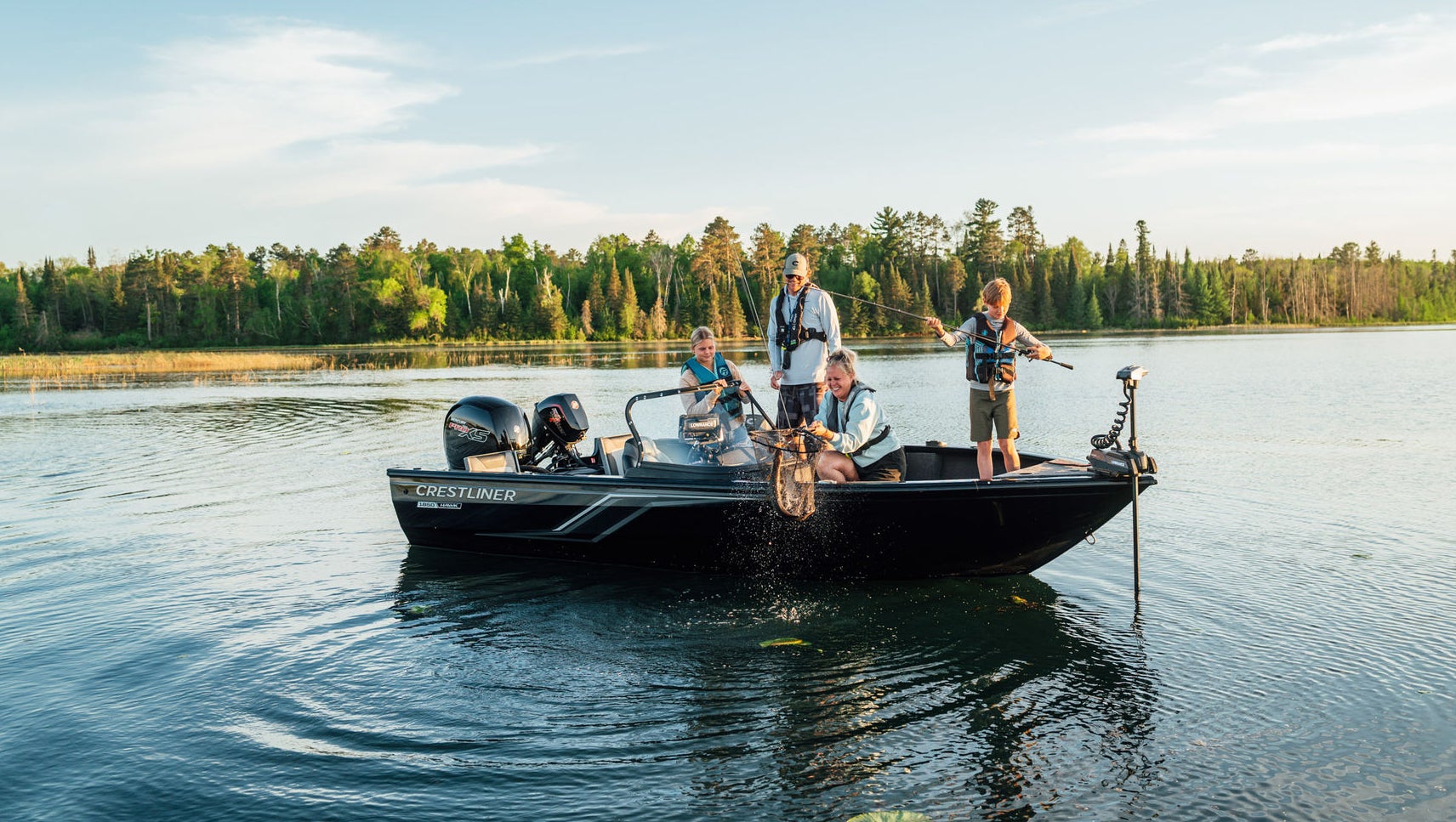
If you’re walleye fishing from your own Crestliner deep-v fishing boat, there’s a good chance you’re a competent angler. Crestliners are built for serious anglers, with accessories and performance to set you apart from the competition, so if you chose one, you probably already know how to get a bend in your rod. But even the best anglers out there are looking to learn something new. Add these three tips for catching more walleye to your bag of tricks, and soon those rods will be bending even more.
Work around weed beds to fish for walleye
When fish are in weed beds, rather than work in or over the weeds, work around them. Clumps of weeds separated from the main bed, points or scallops in the edges of the weed beds, and structure surrounded by weeds are the irregularities where fish will congregate. Long casts and trolling over the middle of the beds themselves are far less productive than focusing on the edges of the weeds where you find these fish-attracting spots.
Bump the bottom
When walleye are down deep and you’re fishing from your boat with jigs or spoons, let your lure bump the bottom a couple of times before hovering just above it. The idea here isn’t to drag the lure across the bottom, but to let it thump down multiple times in quick succession to create attention-getting puffs of mud. When you’re trolling, you can achieve the same effect by sweeping the rod forward, then dropping the tip back until the weight thumps down.
Consider plastic worms
When you’re slow-trolling nightcrawlers from your aluminum fishing boat, and perch keep nipping and stealing your baits, switch half of your worms over to artificial plastics. The perch won’t be able to rip them off. While natural materials may work best in some circumstances, plastic worms definitely have their uses, so mix them into your lineup. If they get bit anywhere near as much as the nightcrawlers, switch over the rest of your rigs. The time you’ll save on re-baiting and redeploying your rigs will more than make up for a moderate decrease in bites, and sometimes you won’t experience any decrease at all.
Bonus tip: Troll at the optimal speed
When you’re trolling downstream in a river with spinner or propeller rigs, set the boat speed and hold a rig next to the boat to make sure the blades spin. Sometimes the current reduces speed through water so much that your rigs won’t work properly until you’re going much faster than “normal” trolling speeds. If you don’t do this simple test, you might not ever realize you need to speed up to get the rig working properly.
Read on for more advanced walleye tips.
This website does not provide financial or legal advice. The information available on this website is provided for general informational and educational purposes only and is not a substitute for professional advice. You should consult with the appropriate professionals prior to making any financial decisions. YOUR USE OR RELIANCE ON ANY OF THE INFORMATION PROVIDED HEREIN IS SOLELY AT YOUR OWN RISK. UNDER NO CIRCUMSTANCE SHALL WE HAVE ANY LIABILITY TO YOU FOR ANY LOSS OR DAMAGE OF ANY KIND INCURRED AS A RESULT OF THE USE OR RELIANCE ON ANY INFORMATION PROVIDED.